
Valencia is a city that lives in several time periods at once. Buildings of the future stand side by side with ancient walls, and traditions that stretch back centuries coexist easily with new forms of urban life. People who have visited at least once often say that Valencia feels like a special world – warm, sunny, and comfortable to live in.
If you try to briefly explain what Valencia is known for, the list will be impressive: from gastronomic legends to architectural symbols. But what is much more important is how all this comes together to form a coherent image of the city. Welcome to Valencia!
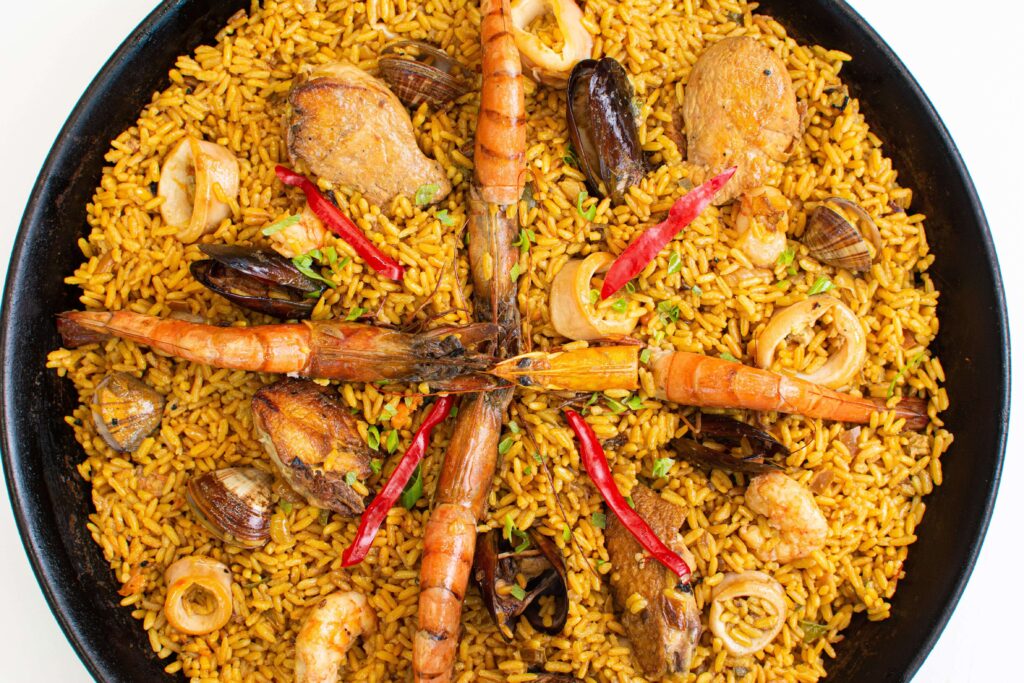
When talking about Valencia, it is impossible to ignore its most recognisable symbol — paella. Here, this dish is part of the culture. Every family has its own cooking traditions, secrets and rituals. Historically, paella originated in the vicinity of the city thanks to the rice fields around Lake Albufera. Over time, this simple peasant dish has become a true gastronomic emblem of the region.
The classic version – Valencian paella – is unlike all the versions often served in tourist areas. The original recipe includes chicken, rabbit, garrofó beans, green beans, spices and rice, which absorbs the juices without turning into porridge. You can try the real thing in small family restaurants, where locals come in large groups. Here, the main thing about paella is not the Instagram picture, but the atmosphere and respect for the recipe.
Paella is a celebration of a slow lunch, for which the entire region is famous. In Valencia, it is not eaten for dinner, but exclusively during the day. This is how traditions retain their deep meaning.
When talking about what Valencia is known for, one of the first places that comes to mind is the futuristic complex that has become the city’s architectural calling card. The project by Santiago Calatrava and Félix Candela transformed part of the dry Turia riverbed into a space where modern architecture flows into the landscape. White lines, reflections in the water, huge glass surfaces – all this creates the feeling that you have stumbled onto the set of a science fiction film.
The complex includes several buildings and spaces. To avoid getting lost in the scale, it is worth dividing them mentally into thematic areas. The architecture catches the eye, science makes you linger inside, and the walking areas create a feeling of lightness.
After visiting, many say that this is where they take the most unusual photos of their trip. But the main thing is not the pictures, but the fact that the area sets the mood of a modern city that is not afraid to experiment.
When March arrives, Valencia changes. It seems as if the whole city is immersed in constant motion – music, processions, loud firecrackers, the aroma of fried churros.
Las Fallas is one of Spain’s most vibrant events. This festival brings together artisans, artists, engineering teams and thousands of residents who work together to create huge figures called fallas. They can be funny, political, touching and absurd. The main thing is that each of them becomes part of the overall story of the year.
Before the statues are burned on the night of the crema, millions of tourists get to see them. It is a rare combination of art, urban carnival and ancient tradition that the people of Valencia pass on from generation to generation.
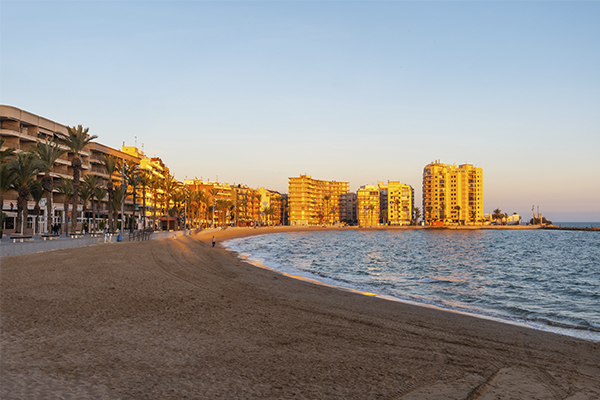
Not everyone knows that Valencia is also a seaside city with a long strip of wide beaches. And although they are close to the centre, it is surprisingly quiet here.
Locals appreciate the beaches for their cleanliness, comfortable waves and atmosphere, which is far from the classic resort hustle and bustle. Here you can start your morning with a jog or a barefoot walk on the sand, and in the evenings enjoy dinner at one of the coastal restaurants. The most famous beaches are Malvarrosa and Playa de las Arenas, but it is their simplicity that makes them so charming.
One of the most unusual places in Valencia is the Turia Gardens, a park created on the site of a former riverbed. Today, it is a long green line that allows you to walk or cycle through most of the city. The park connects different areas, and each section has its own atmosphere: sports areas, palm tree avenues, family playgrounds, bridges offering unusual views. The Turia Gardens are one of those places that make you fall in love with Valencia for good.
Valencia has another fragrant symbol are oranges. The groves around the city, the sweet varieties, the incredible quality of the fruit – all this has long been part of the local identity.
Oranges are present here all year round. In spring, the air is filled with the scent of blossoming orange trees, in winter the new harvest appears on the shelves, and in summer the fruit is used to make juices, sweets and desserts. Even in the city neighbourhoods, orange trees are planted along the streets – the bright fruits create a feeling of eternal summer.
The region’s culinary tradition is not limited to its main national dish. Valencia has a rich gastronomic palette that reflects the local climate and history. Valencian cuisine is based on the principles of simplicity and freshness. Here, the quality of the ingredients is more important than the complexity of the recipes.
Among the most popular dishes are:
These dishes make the gastronomic impression of the city even more profound. It is easy to spend your entire holiday here trying different variations of rice and desserts.
The secret to Valencia’s popularity is that it knows how to be different. History lovers will enjoy the old town, those looking for entertainment will enjoy the modern complexes, families with children will enjoy the parks and beaches, and foodies will enjoy the regional cuisine.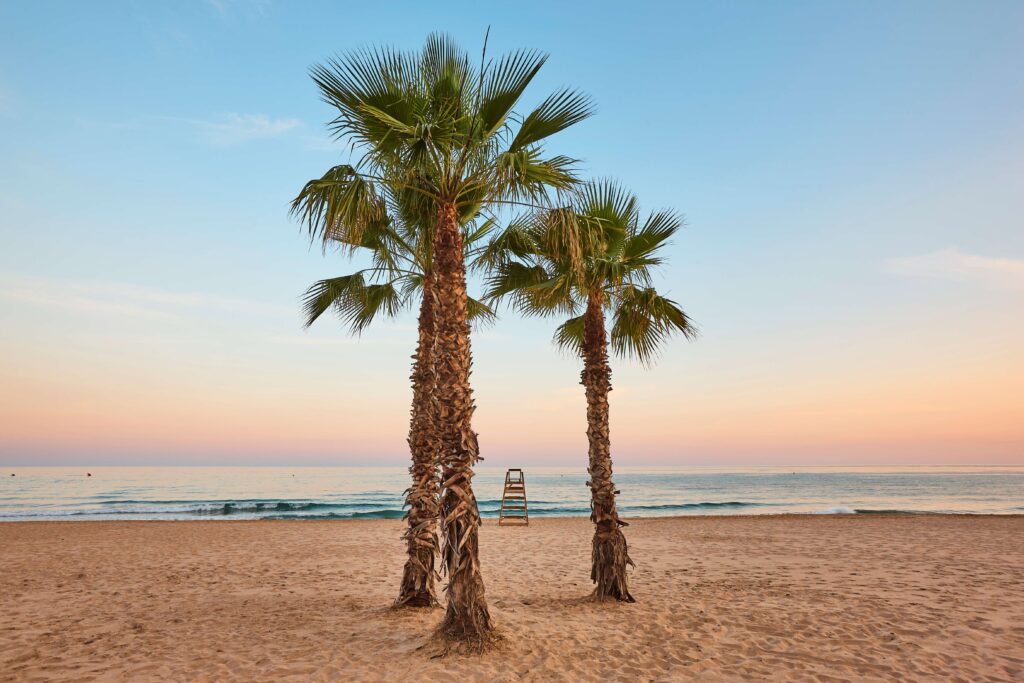
The city carefully preserves its traditions, but at the same time is not afraid to look ahead. This is what makes it so vibrant. Valencia does not strive to surprise all the time it simply offers to be itself, friendly and sunny.
Comments are closed